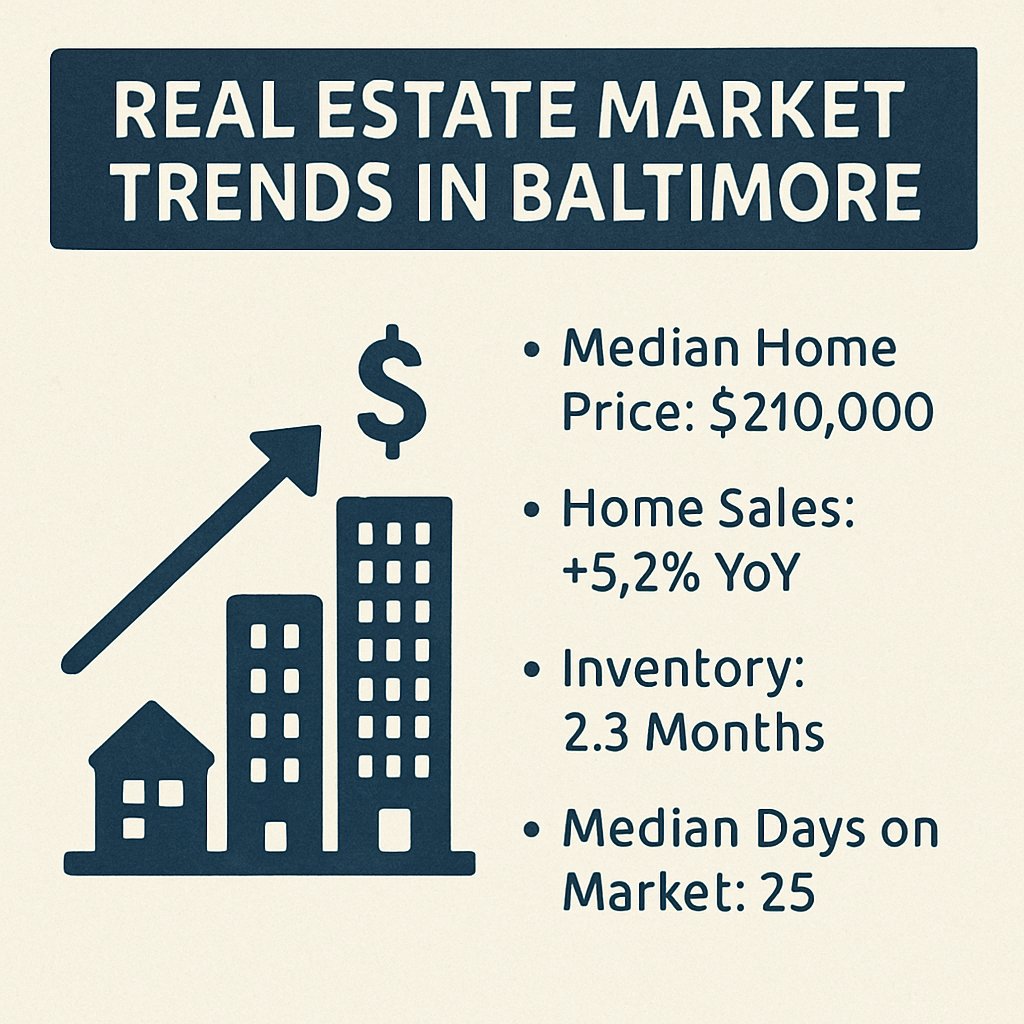
The Real Estate Market Trends in Baltimore
Thinking about buying or selling a home in Baltimore? The market can feel confusing, pulled in two different directions. Home prices remain near historic highs, yet climbing interest rates are making monthly payments more expensive than they have been in years. This tension defines the current market, creating a complex push-and-pull for both buyers and sellers.
This guide cuts through the noise by focusing on three key numbers: prices, inventory, and interest rates. We will translate the data into actionable advice to help you decide if now is a good time for you to make a move in the Baltimore market.
What’s Really Happening With Baltimore Home Prices?
If you're watching the Baltimore city real estate market, your biggest question is likely about cost. Prices are still climbing, but the frantic pace of the last few years has slowed. To get a clear picture, it’s important to look beyond flashy headlines.
Many refer to the "average home price," but that figure can be skewed by a few multi-million-dollar sales. Instead, experts use the median home price—the price right in the middle of all homes sold. This gives a much more accurate snapshot of what a typical buyer is actually spending.
Finally, remember that the sticker price is often just a starting point. In a competitive market, what a home sells for is more telling than its list price. With many homes still selling at or above asking, it's a clear sign that buyer competition remains strong.
Why Is It So Hard to Find a House for Sale in Baltimore?
If you've been searching for a home in Baltimore, MD, you've probably felt the scarcity firsthand. The simple reason for the intense competition is low inventory—the total number of homes currently on the market. There are simply more people looking to buy than there are homes available.
This imbalance creates a Seller’s Market. When there are more buyers than homes, competition gets fierce. In the Baltimore real estate market, sellers are in the driver's seat, often receiving multiple offers that can lead to bidding wars and final sale prices well above the original asking price.
A key metric for this competition is Days on Market (DOM), which tracks the median time a home is listed before an offer is accepted. In a fast-moving market like Baltimore’s, the DOM is often incredibly low, sometimes under two weeks. This indicates that well-priced homes are being snapped up almost as soon as they appear online.
How High Interest Rates Are Changing the Game for Buyers
The biggest change affecting the Baltimore housing market is the cost to borrow money. An interest rate is the fee you pay for a mortgage, and its impact is massive. For someone buying a house in Baltimore, even a one-percent jump can add hundreds of dollars to their monthly payment, forcing many to reconsider what they can truly afford.
This is where your personal purchasing power comes into play. Imagine your budget allows for a $2,200 monthly mortgage payment. A year or two ago, at lower rates, that might have secured a $425,000 home. Today, with higher interest rates, that same payment might only qualify you for a $350,000 home. Your budget hasn't changed, but the price of the home you can afford has dropped significantly.
When this happens to thousands of buyers at once, the market feels it. Frantic bidding wars are becoming slightly less common, and some homes are sitting on the market longer. This is a key factor in the Baltimore housing market forecast, as interest rates are putting a brake on runaway price growth.
Why Your Neighborhood's Market Could Be Totally Different
While higher interest rates are cooling the market, the impact feels different depending on your zip code because all real estate is hyperlocal. It's best to think of Baltimore not as one market, but as a collection of smaller “micro-markets,” each with its own price trends.
For instance, the Patterson Park neighborhood might show fierce competition for three-bedroom rowhomes, keeping prices firm, while another area just a few miles away offers buyers more breathing room. Factors like walkability, renovations, and school districts create these distinct economic pockets.
This means relying on broad headlines can be misleading. To make an informed decision, you must look past regional averages and get data for the specific streets you’re interested in.
Your Playbook for Today's Baltimore Market
So, how do you navigate this market successfully? Whether you're a buyer trying to land a home or a seller aiming for a top-dollar sale, the key is preparation.
- For Buyers:
- Get Fully Pre-Approved: A mortgage pre-approval is stronger than a pre-qualification. It tells sellers your financing is solid and you're ready to act.
- Offer More Than Money: A winning offer isn’t always the highest. Being flexible on the closing date or offering a “rent-back” period can be incredibly attractive to a seller.
- For Sellers:
- Price It Right from Day One: The biggest mistake is overpricing, which can cause a home to sit on the market and lose momentum. A smarter approach is to price your home strategically at or slightly below its market value to attract a wider pool of buyers, often creating multiple offers that drive the final sale price up.
- Have an Inspection Report Ready: Providing a pre-listing inspection report gives buyers confidence and can lead to cleaner, faster offers.
What's Your Next Move in the Baltimore Market?
You now see the forces at play: low inventory is keeping things competitive, while higher interest rates are giving buyers some breathing room. This understanding is your greatest asset. While others react to news, you can interpret the trends, which is the key to moving from a stressful search to a confident decision.
Your best next step isn’t to immediately sign a contract, but to start a conversation. A local expert can help translate these market-wide insights into a powerful, personal plan for your specific property goals.